
At this event we had 17 attendees on the Saturday and 15 on Sunday.
At the start, we had pitches for potential projects, and three teams formed. These were
- Team Bus
- Team Let Me Ride, and
- Team YODO.
Team Let Me Ride
This team looked at the lack of taxis at the airport and the city centre, where long queues were often observed – and those waiting had no confidence in when or even if a taxi would appear to collect them.
Further updates on this team’s progress can be found on the Team Let Me Ride Github Repo.
We have also published the final update of the weekend from this team, which you can view on Youtube using the link below.
Team Yodo
This team, which included participants from the sponsor, Absafe, set out to tackle safety at Aberdeen beach and look at whether AI and related technologies could aid public safety.
Further updates on this team’s progress can be found on the Team Yodo’s Github Repo.
We have also published the final update of the weekend from this team, which you can view on Youtube using the link below.
Team Bus
This team were looking at the issue of the accuracy, or otherwise, of data or information presented via the First Bus App, and the in-shelter displays on the street. In both cases issues were identified with
- ghost buses which appear for a while then disappear before the should be at the stop
- buses were shown as due in “10 minutes” but then either appeared in a much shorter or longer time, and
- buses which turn up but which are then “out of service” and sail past the stop.
There was a suggestion that the app and displays are using service schedules rather than real-time bus data.
All of this is hugely inconvenient to would-be bus passengers, and diminished trust in the app, the displays and the bus operator itself. It is also clearly a potential safety issue if vulnerable persons attempt to get a bus home and are left in the street.
In ideal world the app and shelter displays would be fed only from real-time on bus data which geolocates the bus, and an algorithm would factor in current traffic levels to predict arrivals. In a perfect world that data would be accessible as open data via an API. This would improve trust in existing apps, and stimulate innovation in a marketplace of alternatives, the better of which would flourish.
The team looked at First’s app, the Moovit app and other resources. Interestingly they saw that while both apps appeared to present realtime or almost-realtime data, the First Bus app appeared to have the recently-updated route of the 19 bus accurately mapped, the Moovit one did not. And both appeared to have updates only when a bus passed a bus-stop, not in real time. Despite being a paid-for service, Moovit’s app appeared to be slower in updates and buses jumped in straight lines between stops.
The team concluded that all of this set of issues amounted to a set of problems that could be solved over this weekend without participation of First Bus themselves, and that of other partners such as Nestrans, the local council, Stagecoach and others.
The team then dispersed into other teams.
The remainder of this page is preserved as it was before the weekend started.
Welcome to our thirty-second hack event. Whether you’ve attended them all, or are planning to come to your first, you’ll find it a friendly, inclusive and supportive weekend where you’ll share your skills, knowledge and experience, and find others doing the same.
This time it’s all about Community Safety
What is Community Safety?
The phrase Community Safety can cover a large range of issues. Challenges relating to any of these could be addressed at CTC32. Here are some examples
- Crime Prevention.
- Law Enforcement
- Emergency Preparedness.
- Public Health.
- Victim Support.
- Community Engagement.
- Environmental Safety.
- Education and Awareness.
- Social Services.
For each of these thematic areas, we will identify challenges, and how can the application of technology, coding, data, AI and associated approaches help to address those challenges?
If you have never been to a hackathon before or are interested in knowing more about the projects previously tackled then please check out our hackathon overview page.
Challenges
We will have a number of challenges – or you can suggest your own ones.
For example, one challenge is
How can we make Aberdeen Beach safer?
- Can we use cameras along with an approach of image recognition / computer vision to identify someone in distress in the water, identifying whether they are adults, children, or pets.
- If the system detects someone struggling / lifeless, can it automatically alert the authorities?
- Assess the condition of the detected individual—whether they are alive or in critical need.
We have started a list of challenges posed which you can read here. More will be added soon – and we suggest your own ones.
A hackathon – how does it work?
- At the start of day one we pose these challenges and others.
- Attendees suggest possible solutions.
- Those which attract support are used to create teams.
- The teams work together in agile sprints of activity to develop solutions.
- We eat together and have fun along the way.
- And at the end of the weekend we show what we have built together.
Sponsorship
We are grateful to Dtechtive and Absafe for providing sponsorship towards the costs of running this event.
We are looking for further support. If you can help please get in touch.


Format
This event will be run as a physical event only.
We’re working on finalising the exact format but the weekend will resemble this:
Sat 21 September 2024
- 09:00 Open for breakfast
- 09:30 Introductions
- 10:00 Identify potential projects, form teams
- 10.30 Break-out sessions to familiarise ourselves with some of the tools and platforms
- 11.30 Projects start
- 12.30 Lunch
- 13:30 Projects continue
- 17:00 Wrap up for day one (TBC)
- 17:30 Pizza and drinks for those who stay
- 19:00 or earlier – close of Day 1
Sun 22 September 2024
- 09:30 Breakfast
- 09:45 Projects start
- 12.00 Lunch
- 13:00 Projects continue
- 15:00 Show and tell
- 16:00 Event close and clean-up.
Throughout the weekend we will have regular check-ins where we speak about our projects and hear what others are doing.
Catering
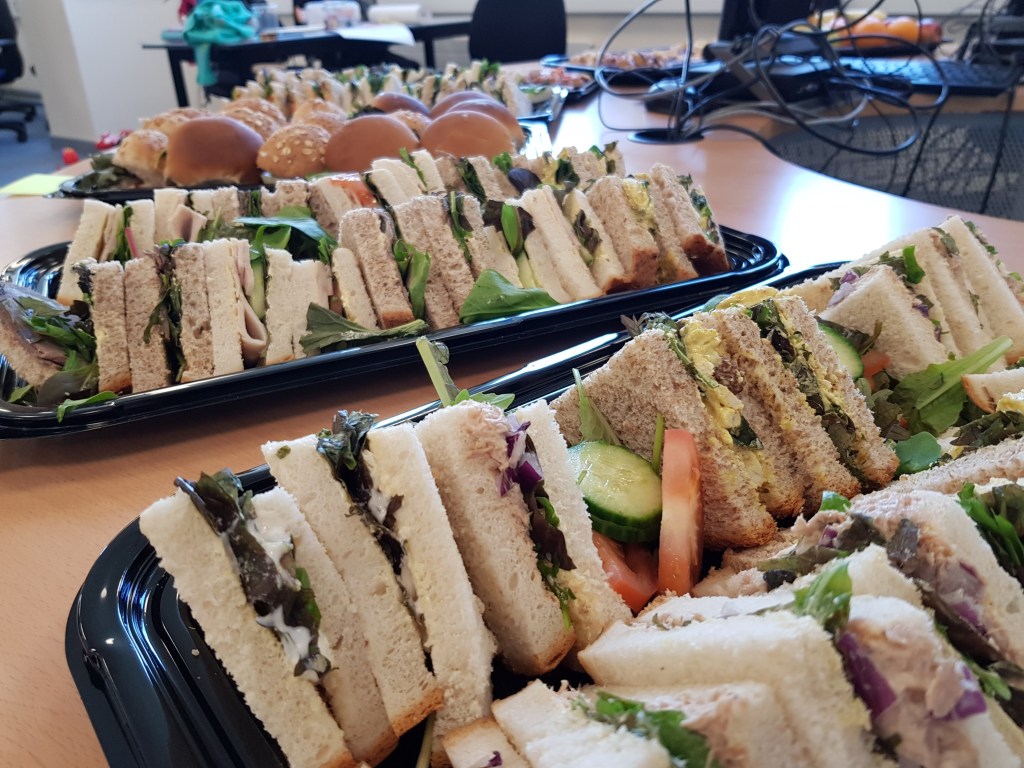
Tickets entitle all attendees to food and drinks. We always provide attendees with breakfasts and lunches each day. Our aim, where we have sufficient financial support is to source these from local social enterprise, The Breadmaker; and normally pizzas for those who want to stay into Saturday evening.
Who should attend?
Anyone! Despite our name, coding is only a part of what we do. It’s essential that we have subject area specialists. In this case that might be those working in all levels of government, those in civic organisations, the public who elect the politicians, and who care about their local area. Also, those who are interested in open data, access to information, FOI, public accountability, and making the world a better place.
Of course, coders, data wranglers, designers, developers, mappers, and other techies are important to a hack weekend.
Tickets
As a charity we aim to encourage all to attend our events – and to make the barrier to attendance as low as we can make it. We also have to consider our costs of catering and administration. We’ve introduced a range of tickets to make attending as easy as possible. These include weekend physical space tickets (for the best experience), single day physical space. Pricing is flexible with suggested and minimum prices. If we can secure sponsorship then we can keep prices down!
If cost is a barrier to you attending please get in touch and we can issue you with a ticket at no cost, no questions asked.
Please note that we have policies for participants on acceptable conduct and Covid 19. By signing up you agree to these conditions of attendance.

